
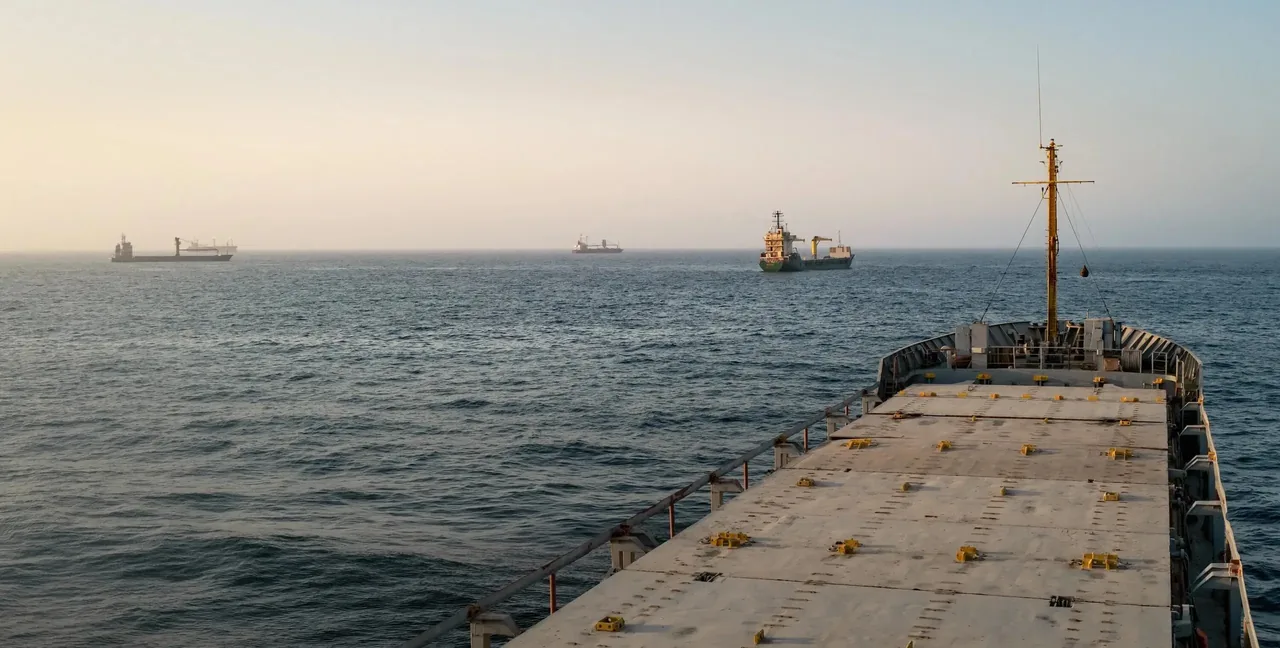
South Korean shipowner Sinokor moved more oil through the Strait of Hormuz in September than the next three owners combined, according to intelligence-firm data, as tanker flows through the chokepoint recovered.
A Little-Known Owner Tops the Hormuz Rankings
A South Korean shipowner that is not widely known outside tanker circles has emerged as the dominant operator of oil transits through the Strait of Hormuz, according to data compiled by maritime intelligence firms and reported by gCaptain. In September, vessels controlled by Sinokor moved more barrels through the chokepoint than the next three shipowners combined.
The finding points to a striking concentration of tanker capacity in the hands of a single group at a time when oil flows through the strait have been recovering. The Strait of Hormuz remains the world's most important oil transit corridor, linking Gulf producers with buyers in Asia, Europe and the Americas, and the composition of the fleet serving it is closely watched by traders, charterers and insurers alike.
Why the Strait of Hormuz Still Sets the Tone
Hormuz carries a large share of seaborne crude and refined products, and any shift in transit volumes or in who controls the tonnage tends to ripple outward quickly. When flows rebound, as the data suggests they did in September, the effect is felt well beyond the Gulf: more cargoes mean more demand for tankers, changes in freight rates on key export routes, and knock-on adjustments for refiners scheduling deliveries.
- Transit volumes through Hormuz are a leading indicator for tanker demand on Asia-bound crude routes.
- Concentration among a small number of owners can influence vessel availability and chartering terms.
- Recovering flows typically tighten tonnage supply in related markets, including the wider ocean freight network.
For shippers, the practical takeaway is that tanker capacity in the Gulf is not evenly distributed. Charterers looking to move cargoes on short notice may find availability shaped by the scheduling decisions of a handful of large operators, which is why early booking and visibility into vessel positioning matter.
What a Single Owner's Dominance Means for Charterers
Sinokor's outsized share of September transits is notable because it exceeds the combined activity of the next three owners. That level of concentration has several implications for the market:
- Availability risk. When one group controls a large slice of transits, spot availability can tighten quickly if those vessels are committed to long-haul voyages or fixed on term business.
- Rate sensitivity. Freight rates on Gulf export routes can respond sharply to changes in effective tonnage supply, even when headline oil flows are stable.
- Operational planning. Importers and refiners benefit from booking further ahead and maintaining relationships with multiple carriers rather than relying on a single source of capacity.
It is worth stressing that the reported data reflects vessel ownership or control as tracked by intelligence firms, not a formal market share. The picture can shift month to month as cargoes are fixed and voyages are completed.
The Broader Freight Picture
Tanker movements in the Gulf do not exist in isolation. Crude and product cargoes connect to a wider logistics chain that includes containerised goods, project cargo and bulk commodities, and capacity pressures in one segment can spill into others when vessels are redirected or schedules are revised. Shippers managing mixed supply chains should keep an eye on how energy trades absorb tonnage, since that can affect space and pricing on adjacent routes.
Wintoo's ocean freight service supports shippers with booking, documentation and schedule coordination across major trade lanes, while our container shipping solutions help businesses secure space and plan around shifting capacity conditions.
What to Watch Next
Several factors will determine whether Sinokor's September lead proves durable or reflects a one-month scheduling anomaly:
- Whether Hormuz transit volumes continue to recover in the following months.
- How quickly the group's vessels are re-fixed and whether they remain concentrated on Gulf export routes.
- Whether other owners add tonnage to capture rebounding flows.
- How freight rates on Asia-bound crude and product routes respond to changes in effective supply.
For now, the data underlines a simple point: in the world's most strategically important oil chokepoint, a small number of owners can shape the market. Shippers and charterers who track vessel ownership alongside headline flow figures will be better placed to anticipate availability and price movements.
What This Means for Your China Export Bookings
Concentration among Gulf tanker owners rarely stays a tanker story. When a handful of operators control the bulk of Hormuz transits, the knock-on effects reach Chinese export shippers in two ways: bunker and fuel-cost sentiment firms up quickly, and vessel repositioning around energy trades can tighten space on overlapping Asia–Europe and Asia–Middle East loops. If you ship containers or breakbulk out of Shenzhen, Ningbo or Shanghai, expect schedule reliability — not just headline rates — to be the first thing to wobble, usually with 1-2 weeks' notice.
Practically, book further ahead than feels comfortable on Gulf-adjacent and Europe-bound lanes, and avoid single-carrier dependency for time-critical cargo. Ask your forwarder three direct questions:
- Which routing and transshipment points are you quoting, and what's the realistic door-to-door range rather than the port-to-port best case?
- How much space is actually confirmed versus rolled, and what's your rollover policy if the vessel is re-fixed?
- Are bunker adjustment and peak-season surcharges locked for this booking, or floating?
A forwarder with genuine carrier relationships will answer these without hedging. If yours can't, that's your signal to diversify before the next rate cycle bites.
Sources
Get a freight quote
Tell us what you're moving and where — we'll reply within one working day.