
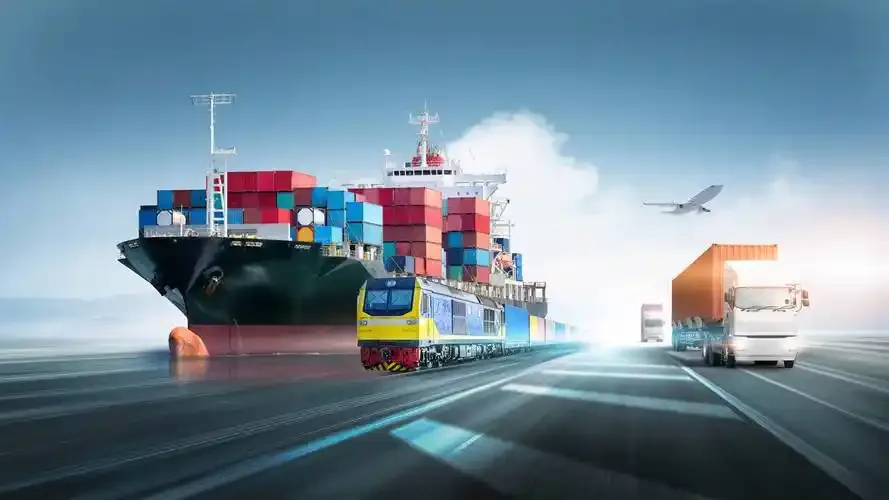
Shipping from China to UK involves several transport modes, each with distinct transit times, costs, and customs procedures. This guide covers sea, air, rail, and express options to help you choose the right method for your cargo.
Shipping from China to UK: Options and Process
When shipping from China to UK, you have four main transport modes: sea freight, air freight, rail freight, and express courier. Each offers different trade-offs between cost, speed, and capacity.
- Sea freight: The most economical for large shipments. Typically 30–40 days port-to-port, plus customs and inland delivery.
- Air freight: Fast but expensive. Usually 5–10 days door-to-door, depending on routing and customs.
- Rail freight: A middle ground via China-Europe trains, often 15–25 days to UK terminals.
- Express courier: For small parcels, usually 3–7 days door-to-door with full tracking.
Sea Freight: The Backbone of UK Trade
Sea freight moves the majority of goods from China to the UK. You can choose between Full Container Load (FCL) and Less than Container Load (LCL). FCL is cost-effective for volumes over 15 cubic meters, while LCL suits smaller shipments. Major UK ports include Felixstowe, Southampton, and London Gateway. Transit times from Shanghai or Shenzhen to these ports typically range from 30 to 40 days. For a reliable ocean freight service, work with a forwarder who can handle port-to-door logistics.
Air Freight: When Speed Matters
Air freight is ideal for high-value, time-sensitive, or perishable goods. Major Chinese hubs are Shanghai (PVG), Beijing (PEK), and Guangzhou (CAN), with UK destinations like Heathrow, East Midlands, and Stansted. Transit times are usually 5–10 days door-to-door. Costs are calculated by chargeable weight (actual or volumetric, whichever is greater). For urgent shipments, consider an air freight service that includes customs clearance.
Rail Freight: A Growing Alternative
Rail freight from China to the UK via the China-Europe Railway Express has become popular for its balance of speed and cost. Trains depart from cities like Chongqing, Chengdu, and Xi'an, crossing Kazakhstan, Russia, and Europe before reaching UK terminals via the Channel Tunnel. Typical transit times are 15–25 days. Rail is well-suited for medium-sized shipments that need faster delivery than sea but are too costly for air.
Express Courier: For Small Parcels
Express services like DHL, FedEx, and UPS offer door-to-door delivery for parcels up to 70 kg. Transit times are usually 3–7 days. While convenient, express is the most expensive per kilogram. It is best for samples, documents, and urgent small items.
What Affects Shipping Costs
Several factors influence the total cost of shipping from China to UK:
- Mode of transport: Sea is cheapest per unit, air is fastest but priciest.
- Weight and volume: Carriers charge by chargeable weight; volumetric weight applies to bulky items.
- Distance and route: Port-to-port vs. door-to-door, and specific origin/destination.
- Seasonality: Peak seasons (e.g., before Christmas) see higher rates and longer transit.
- Fuel surcharges and currency fluctuations: These can change frequently.
- Customs duties and taxes: UK import VAT (usually 20%) and duty rates depend on commodity codes.
Customs and Documentation
To clear UK customs, you need:
- Commercial invoice
- Packing list
- Bill of lading (sea) or air waybill (air)
- Certificate of origin (if applicable)
- Import license for restricted goods
Ensure your commodity codes are correct to avoid delays. Most shipments require an EORI number for UK imports. Customs clearance can take 1–3 days if documents are in order.
Practical Tips for Shippers
- Plan ahead: Book space early during peak seasons.
- Consolidate: Combine smaller shipments to save on costs.
- Insure your cargo: Protect against loss or damage.
- Work with a freight forwarder: They handle documentation, customs, and logistics.
- Track your shipment: Use tracking numbers for visibility.
Choosing the Right Mode
Select based on your priorities:
- Cost-sensitive, non-urgent: Sea freight.
- Time-sensitive, high-value: Air freight.
- Balanced: Rail freight.
- Small, urgent: Express courier.
By understanding these options and planning ahead, you can ensure a smooth shipping experience from China to the UK.
The Forwarder's View: What This Means for Your Next UK Shipment
From where I sit, the mode comparison is the easy part. The real cost and risk sit in the handoffs — port congestion at Felixstowe or Southampton, rail terminal backlogs in Europe, and the customs entry itself. For importers shipping out of China, the practical takeaway is to stop optimizing for transit time alone and start optimizing for total landed cost and predictability.
- Ask your forwarder for a door-to-door quote with named surcharges (BAF, peak season, destination charges), not a port-to-port rate.
- Confirm who files the UK customs entry and whether your EORI and commodity codes are validated before booking.
- For rail, ask about contingency routing if a border or terminal backs up — schedules can slip by a week or more.
- For sea LCL, ask about consolidation cut-offs and whether your cargo will be co-loaded with compatible goods.
- Get a written demurrage/detention and storage policy; these often exceed the freight itself when clearance stalls.
My advice: book space earlier than feels necessary in peak season, keep 10-15% buffer in your delivery windows, and treat your forwarder as a customs and compliance partner, not just a rate provider. The cheapest quote rarely survives contact with a delayed entry.
Get a freight quote
Tell us what you're moving and where — we'll reply within one working day.