
A practical guide to shipping from China to Italy, covering sea, air, rail and express options, transit times, costs, customs and documents.
Shipping from China to Italy: Mode Options and Transit Times
Italy is one of Europe's largest import markets, and Chinese suppliers are a major source for Italian businesses. Whether you are moving full containers, palletised cargo, or small parcels, the right shipping method depends on your budget, timeline, and cargo type. This guide covers the main transport modes, typical transit times, cost drivers, customs procedures, and practical tips for shipping from China to Italy.
Sea Freight
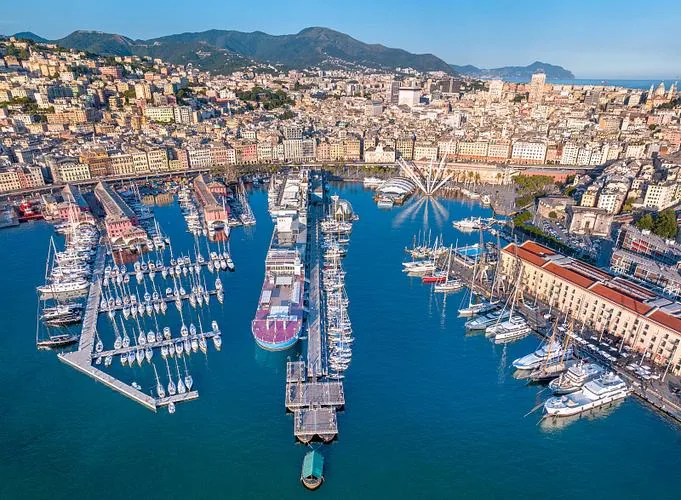
Sea freight is the most economical option for large volumes. Italy has several major container ports, including Genoa, La Spezia, Livorno, Naples, and Gioia Tauro. Transit times from Chinese ports such as Shanghai, Ningbo, and Shenzhen to Italian ports typically range from 30 to 45 days, depending on the routing and carrier. Direct services are available, but many routes involve transshipment via hubs like Piraeus, Malta, or Valencia, which can add several days.
- FCL (Full Container Load): Best for shipments over 15–20 cubic metres. You book an entire 20ft or 40ft container, giving you exclusive use and faster port handling.
- LCL (Less than Container Load): Suitable for smaller volumes (1–15 cubic metres). Your cargo is consolidated with other shipments, and you pay per cubic metre. LCL usually adds 5–10 days for consolidation and deconsolidation.
For ocean freight options to Italy, see ocean freight services.
Air Freight
When speed matters, air freight is the go-to choice. Major Chinese airports (Shanghai Pudong, Beijing, Guangzhou, Shenzhen) connect to Italian airports such as Milan Malpensa and Rome Fiumicino. Transit times are typically 3–7 days door-to-door, including customs clearance. Air freight costs are significantly higher than sea freight but can be worthwhile for high-value, time-sensitive, or perishable goods.
Rail Freight
Rail freight from China to Europe has grown in popularity. Trains depart from cities like Chongqing, Chengdu, and Xi'an, and arrive at European hubs such as Duisburg and Łódź. From there, cargo is trucked or railed to Italy. Total transit time is usually 18–25 days, making rail a middle ground between sea and air in both cost and speed.
Express Courier
For small parcels (under 30 kg) and urgent documents, express couriers like DHL, FedEx, and UPS offer door-to-door delivery in 3–5 business days. This is the most expensive per-kilogram option but requires minimal effort from the shipper.
What Affects Shipping Costs
Several factors influence the total cost of shipping from China to Italy:
- Chargeable weight: For air and express, cost is based on volumetric or actual weight, whichever is greater. For sea LCL, it's based on volume (cubic metres).
- Seasonality: Rates spike before major holidays (e.g., Christmas, Chinese New Year) and during peak shipping seasons.
- Fuel surcharges and peak season surcharges: Carriers adjust these frequently.
- Port and terminal fees: These vary by port and are often passed on to the shipper.
- Destination charges: In Italy, you may face terminal handling, customs brokerage, and delivery fees.
- Cargo value and insurance: Higher-value goods may require additional insurance.
Customs Clearance and Documents
Importing into Italy requires compliance with EU customs regulations. The key documents are:
- Commercial invoice: Details the transaction, parties, and value.
- Packing list: Itemises the contents, weights, and dimensions.
- Bill of lading (B/L) or air waybill (AWB): Contract of carriage and title document.
- EORI number: Required for all businesses importing into the EU.
- Customs declaration: Usually filed electronically by your customs broker.
- Certificates of origin or conformity: May be needed for certain products (e.g., CE marking for electronics).
Duties and VAT are calculated on the CIF value (cost, insurance, freight). Italy's standard VAT rate is 22%, though some goods may qualify for reduced rates. It's essential to provide accurate descriptions and values to avoid delays or penalties.
Practical Tips for Shippers
- Plan ahead: Book sea freight at least 4–6 weeks before your desired arrival to secure space and avoid peak-season surcharges.
- Consolidate shipments: If you have multiple suppliers, consider using a consolidation service to reduce costs.
- Work with a freight forwarder: A forwarder can handle documentation, customs clearance, and door-to-door delivery, simplifying the process.
- Insure your cargo: Especially for high-value goods, cargo insurance is a small price for peace of mind.
- Check product compliance: Ensure your goods meet EU standards (e.g., CE marking, REACH) before shipping.
- Track your shipment: Use the forwarder's tracking tools to monitor progress and address issues promptly.
For air freight options, see air freight services.
Conclusion
Shipping from China to Italy involves choosing the right mode, understanding costs, and navigating customs. By planning ahead and working with a reliable partner, you can ensure a smooth and cost-effective supply chain.
The Forwarder's Take: What This Means for Your Italy-Bound Cargo
The mode comparison above is useful, but the real cost and risk in the China–Italy lane sit at the destination, not on the water. Italian ports — Genoa and La Spezia especially — are prone to congestion and trucker shortages that can add several days and unexpected detention or demurrage charges after your container has already arrived. Budget for that buffer rather than treating the ocean transit as the whole journey, and treat "port to door" as its own leg with its own risks.
Practically, importers should:
- Build 1–2 weeks of slack into sea schedules into Italy; don't promise your customers the carrier's ETA.
- Confirm who is responsible for destination THC, customs brokerage, and inland haulage — these are where surprise invoices appear.
- For rail, verify the final Italy leg is quoted door-to-door, not just to a European hub.
- Ask whether your forwarder has a named Italian customs broker and can clear under your EORI without delays.
Questions worth putting to your forwarder: What's your realistic door-to-door range into my Italian city, not just port-to-port? Who pays destination charges, and can you quote them upfront? How do you handle congestion or rollovers at Italian ports? And can you consolidate multiple suppliers before departure to cut LCL costs?
Get a freight quote
Tell us what you're moving and where — we'll reply within one working day.